Retail & wholesale · Delivery available Mon–Fri
Home
Fresno Favorites All Fresno Favorites Trees Shrubs Perennials
Plants All Plants Trees Japanese Maples Shrubs Roses Tropicals Waterwise Palms Annuals Perennials Vines Fruit Trees/Citrus Shade Loving Topiaries Houseplants Groundcover
Products All Products Bulk Materials Pottery / Fountains / Statuary Irrigation Supplies Fertilizers / Chemicals Bagged Soils
Blog Contact About Call (559) 291-8733
Proven in the Central Valley

Fresno Favorites

After years of trial and error on our own growing grounds, these are the trees, shrubs and perennials that don't just survive a Fresno summer — they thrive in it.

Why this list exists

Most plant advice isn't written for us.

Pick up a general gardening book and it'll recommend plants for a climate that gets summer rain, acidic soil and a real winter. Fresno has none of those. We sit in a Mediterranean climate with a long, punishing dry season, alkaline soil that's often heavy clay, and just enough winter frost to knock out anything truly tropical.

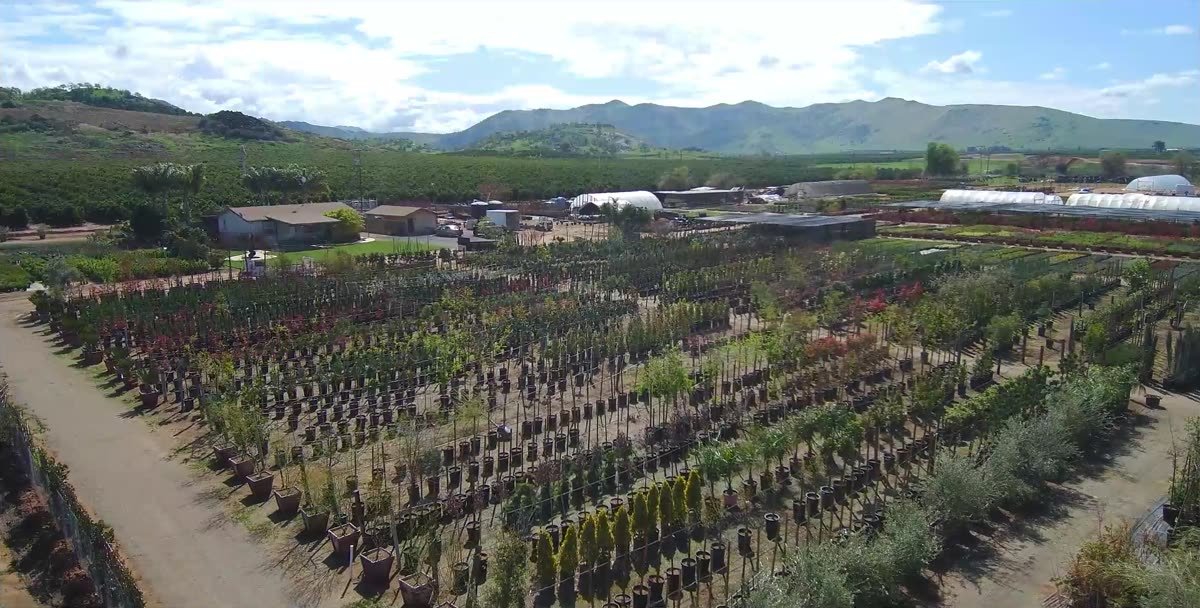
Everything below has been grown on our own 20+ acres and watched through multiple Valley summers. These aren't the plants that merely tolerate it here — they're the ones that still look good in late August, when it counts.

9bUSDA hardiness zone — winter lows typically 25–30°F
100°F+Routine summer highs, often for weeks at a stretch
~11 inAnnual rainfall, almost all of it between November and March
AlkalineClay to clay-loam soils that drain slowly and crust hard

Those four numbers explain nearly every plant failure we hear about at the counter. A plant that can't take reflected heat, or one that needs sharp drainage sitting in unamended clay, will struggle here no matter how well it's watered.

Browse by type

Three groups, fifteen plants

Each has its own page with the full rundown — or keep scrolling for all of them together.

The full list

All fifteen Fresno Favorites

Mature sizes are what to plan for at roughly ten years in Valley conditions — not nursery-tag optimism. Filter by type, or read straight through.

Showing all 15 plants

Tree

Oklahoma Redbud

Cercis reniformis 'Oklahoma'

Mature size
15–20 ft tall × 15–20 ft wide
Sun
Full sun to part shade
Water
Moderate; low once established
Foliage
Deciduous
Bloom
Wine-red flowers, early spring (before leaves)

A small tree that fits a real Fresno front yard. Blooms on bare wood before anything else wakes up, then holds thick, glossy leaves that resist scorching far better than eastern redbuds.

From our staff: Give it afternoon shade in the hottest western exposures. Prune only to shape, right after flowering.

Tree

Chinese Pistache

Pistacia chinensis

Mature size
30–40 ft tall × 25–35 ft wide
Sun
Full sun
Water
Low once established
Foliage
Deciduous
Bloom
Grown for foliage; brilliant orange-red fall color

Arguably the best fall color in the Central Valley, and genuinely tough — it shrugs off heat, alkaline soil and drought once its roots are down.

From our staff: Young trees can look gawky and lean; stake and structurally prune the first few years and it matures into a broad, even canopy. Plant male ('Keith Davey') selections to avoid fruit litter.

Tree

Chinese Elm

Ulmus parvifolia

Mature size
40–50 ft tall × 40–50 ft wide
Sun
Full sun
Water
Moderate
Foliage
Semi-evergreen in mild winters
Bloom
Inconspicuous; grown for shade and mottled bark

Fast shade when you need it yesterday, with beautiful patchwork bark that peels to cream, orange and grey. Handles reflected heat off driveways and walls.

From our staff: The speed is the catch — prune for structure early and often, or it develops weak, narrow branch crotches that split in wind.

Tree

Fruitless Olive

Olea europaea 'Swan Hill' / 'Wilsonii'

Mature size
25–30 ft tall × 25–30 ft wide
Sun
Full sun
Water
Very low once established
Foliage
Evergreen
Bloom
Fruitless selections; no messy drop

Silver-grey evergreen structure that looks intentional year-round and asks for almost no water. The Mediterranean climate match is close to exact.

From our staff: 'Swan Hill' is the one to ask for if allergies are a concern — it produces little to no pollen. Avoid overwatering; wet feet is the main way these fail here.

Tree

Crape Myrtle

Lagerstroemia indica & hybrids

Mature size
15–25 ft tall × 10–20 ft wide (variety dependent)
Sun
Full sun
Water
Low to moderate
Foliage
Deciduous
Bloom
Heavy summer bloom — white, pink, red or lavender — often 60–100 days

Blooms through the hottest stretch of a Fresno summer, when almost nothing else does, then follows with fall color and sculptural winter bark.

From our staff: Ask for mildew-resistant hybrids ('Natchez', 'Muskogee', 'Tuscarora'). Never 'crape murder' — topping ruins the branch structure and produces weak, whippy regrowth.

Shrub

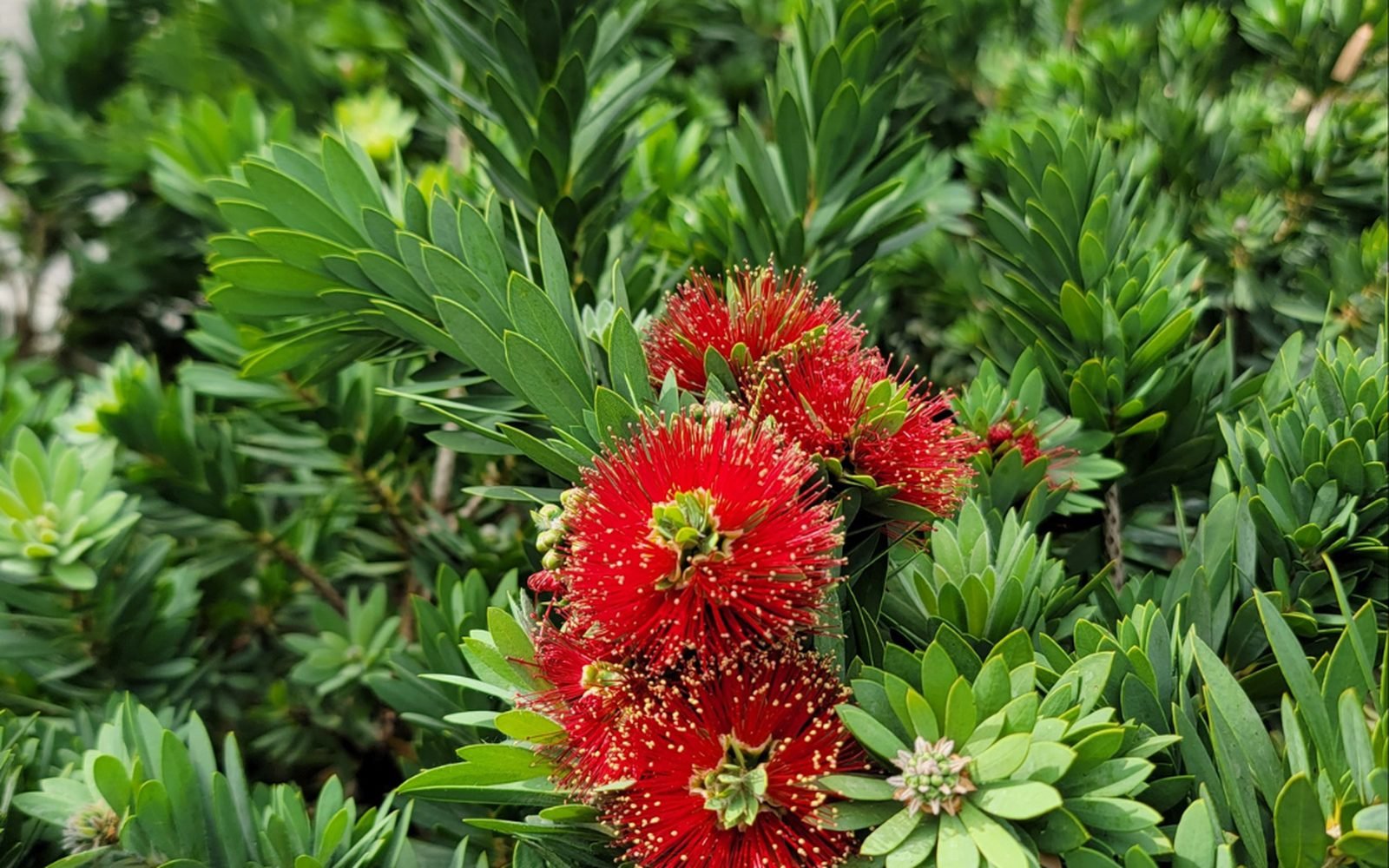
Dwarf Bottlebrush

Callistemon viminalis 'Little John'

Mature size
3 ft tall × 3–5 ft wide
Sun
Full sun
Water
Low once established
Foliage
Evergreen
Bloom
Red bottlebrush flowers, spring through fall

Compact, blue-green and almost indestructible in heat. A hummingbird magnet that stays genuinely dwarf instead of outgrowing its spot in three years.

From our staff: Resist heavy shearing — it flowers on new wood, so light tip-pruning after a bloom flush keeps it dense without cutting off the next round.

Shrub

Iceberg Rose

Rosa 'Iceberg'

Mature size
3–4 ft tall × 3 ft wide (climbing form larger)
Sun
Full sun
Water
Moderate
Foliage
Deciduous
Bloom
Clusters of white flowers, spring until frost

The most forgiving rose for Valley conditions — near-continuous bloom, strong disease resistance, and it takes the heat without the fuss hybrid teas demand.

From our staff: Deadhead spent clusters to keep it cycling. Water at the base, not overhead, to keep foliage clean through humid spells.

Shrub

Privet

Ligustrum japonicum / L. texanum

Mature size
6–12 ft tall × 4–8 ft wide, shears smaller
Sun
Full sun to part shade
Water
Moderate
Foliage
Evergreen
Bloom
Fragrant white flower panicles, late spring

The workhorse screening hedge. Fast, dense, cheap to plant en masse, and it takes shearing into a formal wall better than almost anything else that survives here.

From our staff: The late-spring bloom is strongly scented and a known allergen — shear before flowering if anyone in the household is sensitive.

Shrub

Dwarf Olive

Olea europaea 'Little Ollie' (Montra)

Mature size
4–6 ft tall × 4–6 ft wide
Sun
Full sun
Water
Very low once established
Foliage
Evergreen
Bloom
Fruitless; grown for silver-green foliage

All the Mediterranean texture of an olive at hedge scale, with no fruit to stain a driveway. Excellent low formal hedge, and one of the best large-container shrubs for full sun.

From our staff: Needs sharp drainage. In heavy clay, plant slightly high and mound the soil rather than sinking it into a bowl that holds water.

Shrub

Indian Hawthorn

Rhaphiolepis indica

Mature size
3–5 ft tall × 3–5 ft wide
Sun
Full sun to part shade
Water
Low to moderate
Foliage
Evergreen
Bloom
Pink or white flowers in spring, blue-black berries after

Tidy, mounded and self-contained — it holds its shape with almost no pruning, which makes it a reliable foundation planting along walkways and under windows.

From our staff: Give it air movement and avoid overhead watering; crowded, damp plantings are where leaf spot shows up.

Perennial

Lantana

Lantana camara / L. montevidensis

Mature size
1–3 ft tall × 3–6 ft wide
Sun
Full sun
Water
Low once established
Foliage
Evergreen in mild winters; may die back after frost
Bloom
Continuous clusters, late spring until frost

Thrives on exactly the conditions that kill other things — reflected heat, poor soil, little water. Butterflies work it constantly.

From our staff: Cut back hard in late winter to force fresh growth. Note the berries are toxic if eaten, so think twice in gardens used by small children or pets.

Perennial

Gaura

Oenothera lindheimeri (formerly Gaura lindheimeri)

Mature size
2–3 ft tall × 2–3 ft wide
Sun
Full sun
Water
Low once established
Foliage
Deciduous to semi-evergreen
Bloom
Airy white or pink flowers on wands, spring through fall

Adds motion and softness to stiff plantings — the flowers float on thin stems and move with any breeze. Long bloom season with very little input.

From our staff: Shear by about a third mid-summer if it flops or goes leggy; it returns tidier and flowers again into autumn.

Perennial

Daylily

Hemerocallis hybrids

Mature size
1–3 ft tall × 1–2 ft wide
Sun
Full sun to light shade
Water
Moderate
Foliage
Evergreen or deciduous by variety
Bloom
Late spring into summer; reblooming types flower in repeated flushes

Close to unkillable, spreads into a solid clump that suppresses weeds, and handles the heat while still reading as a lush, traditional perennial.

From our staff: Ask for reblooming selections ('Stella de Oro', 'Happy Returns') for repeat flushes rather than one show. Divide congested clumps every few years to keep bloom counts up.

Perennial

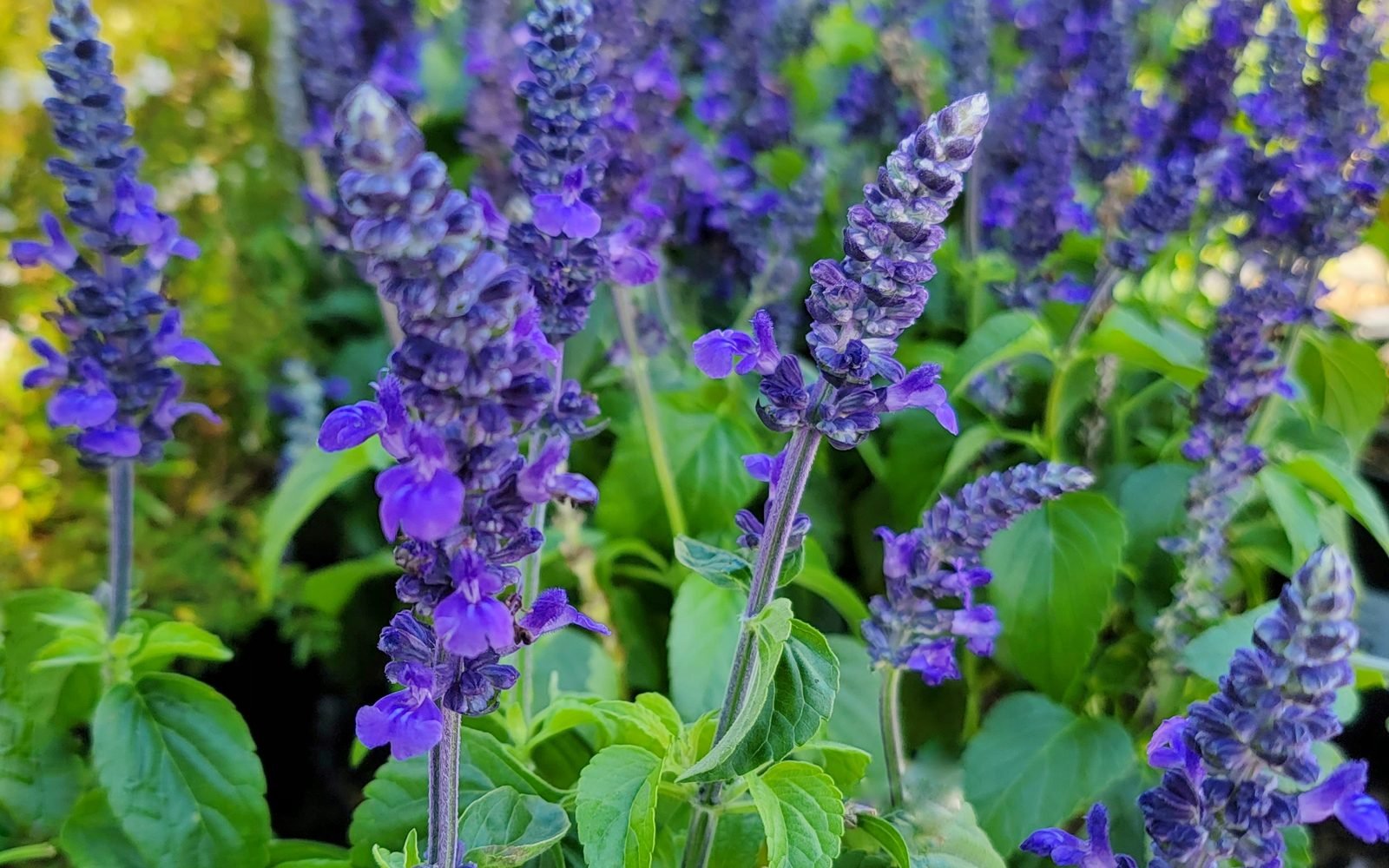
Salvia

Salvia greggii, S. leucantha, S. microphylla

Mature size
2–4 ft tall × 2–4 ft wide
Sun
Full sun
Water
Low once established
Foliage
Evergreen to semi-evergreen
Bloom
Long season — spring through fall depending on species

The best hummingbird plant on this list, and genuinely drought-tolerant. Autumn sage types flower for months; Mexican bush sage carries the late-season show.

From our staff: Cut back by roughly half after the main flush to prevent woody, bare centers. Avoid rich soil and heavy feeding — lean conditions produce better flowering.

Perennial

Agapanthus

Agapanthus africanus / praecox

Mature size
1–3 ft tall × 1–2 ft wide (dwarf forms ~1 ft)
Sun
Full sun to part shade
Water
Moderate, then low once established
Foliage
Evergreen
Bloom
Blue or white globe flowers, early to mid summer

Strappy evergreen foliage holds a bed together all year, then throws globe flowers on tall stems in early summer. Tolerates part shade, which few tough plants here do.

From our staff: Flowers best when slightly crowded, so don't rush to divide. Remove spent stalks at the base to keep it looking deliberate.

Side by side

Quick comparison

Handy when you're narrowing down by the constraint that actually matters — usually available space or how much water you're willing to give it.

PlantTypeMature height SunWaterFoliage
Oklahoma RedbudCercis reniformis 'Oklahoma' Tree 15–20 ft Full sun to part shade Moderate; low once established Deciduous
Chinese PistachePistacia chinensis Tree 30–40 ft Full sun Low once established Deciduous
Chinese ElmUlmus parvifolia Tree 40–50 ft Full sun Moderate Semi-evergreen in mild winters
Fruitless OliveOlea europaea 'Swan Hill' / 'Wilsonii' Tree 25–30 ft Full sun Very low once established Evergreen
Crape MyrtleLagerstroemia indica & hybrids Tree 15–25 ft Full sun Low to moderate Deciduous
Dwarf BottlebrushCallistemon viminalis 'Little John' Shrub 3 ft Full sun Low once established Evergreen
Iceberg RoseRosa 'Iceberg' Shrub 3–4 ft Full sun Moderate Deciduous
PrivetLigustrum japonicum / L. texanum Shrub 6–12 ft Full sun to part shade Moderate Evergreen
Dwarf OliveOlea europaea 'Little Ollie' (Montra) Shrub 4–6 ft Full sun Very low once established Evergreen
Indian HawthornRhaphiolepis indica Shrub 3–5 ft Full sun to part shade Low to moderate Evergreen
LantanaLantana camara / L. montevidensis Perennial 1–3 ft Full sun Low once established Evergreen in mild winters; may die back after frost
GauraOenothera lindheimeri (formerly Gaura lindheimeri) Perennial 2–3 ft Full sun Low once established Deciduous to semi-evergreen
DaylilyHemerocallis hybrids Perennial 1–3 ft Full sun to light shade Moderate Evergreen or deciduous by variety
SalviaSalvia greggii, S. leucantha, S. microphylla Perennial 2–4 ft Full sun Low once established Evergreen to semi-evergreen
AgapanthusAgapanthus africanus / praecox Perennial 1–3 ft Full sun to part shade Moderate, then low once established Evergreen

"Low water once established" generally means after the first full year in the ground — the establishment period is where most drought-tolerant plants are lost.

Getting them started

How to make them thrive

The same six things account for most of the difference between a plant that struggles and one that takes off.

🕳️ Planting hole & soil

Dig the hole two to three times as wide as the root ball but no deeper than it is tall. Width helps roots spread laterally through the compacted layer; extra depth just lets the plant settle and sink.

  • Amend the backfill lightly with compost — heavy amendment creates a "pot" of rich soil that roots refuse to leave.
  • Set the top of the root ball slightly above grade in clay, then mound soil up to it.
  • Break up glazed sides of the hole so roots can penetrate.

💧 Watering the first year

Deep and infrequent beats shallow and often. Frequent light watering trains roots to stay at the surface, exactly where the soil bakes hardest in July.

  • Water slowly enough to soak the full root zone, then let the top few inches dry before the next round.
  • Expect to keep watering through the first summer even for drought-tolerant species.
  • Check by hand — push a finger or a soil probe in rather than trusting a schedule.

🪵 Mulch

Two to three inches of organic mulch is the single highest-return thing you can do here. It moderates soil temperature, slows evaporation dramatically and suppresses weeds.

  • Keep mulch pulled back a few inches from trunks and stems to prevent rot.
  • Refresh annually as it breaks down and feeds the soil.

🌾 Feeding

Less than you'd think. A balanced slow-release fertilizer in spring is plenty for most of this list, and several actively prefer lean soil.

  • Over-feeding drought-tolerant plants like lantana, gaura and salvia produces soft growth and fewer flowers.
  • Don't fertilize late in the season — it pushes tender growth into frost.

✂️ Pruning

Timing matters more than technique. Prune spring bloomers after they flower; prune summer bloomers in late winter while dormant.

  • Structurally prune fast growers like Chinese elm early — it prevents weak, splitting branch unions later.
  • Never top a crape myrtle. It destroys the branch architecture and produces whippy regrowth.
  • Cut salvias back by roughly half after a bloom flush to stop woody, bare centers.

🐞 Pests & problems

This list was chosen partly because these plants have few serious pest issues here. Most trouble traces back to water or air movement, not insects.

  • Aphids and spider mites show up on stressed, under-watered plants — fix the watering first.
  • Mildew on crape myrtle and leaf spot on Indian hawthorn both improve with spacing and by watering at the base instead of overhead.
  • Yellowing between leaf veins usually means our alkaline soil locking up iron, not a lack of fertilizer.
Timing

When to plant in Fresno

If you take one thing from this page: fall is the best planting season here, not spring. It's the closest thing to a free head start a Valley garden gets.

Oct – Nov

Fall — the best window

Soil is still warm but the air has cooled. Roots establish all winter with almost no heat stress, so the plant faces its first summer already anchored.

Dec – Feb

Winter — bare root & pruning

Good for planting dormant and bare-root stock, and the right time to prune deciduous trees and summer-flowering shrubs while the structure is visible.

Mar – May

Spring — second best

Workable, and the widest selection is on the yard. Plant early in the window so roots get going before real heat arrives, and stay on top of watering.

Jun – Sep

Summer — avoid if you can

Planting into triple-digit heat means constant watering and high losses. If you must, plant at dusk, mulch immediately and shade new plantings for the first few weeks.