Retail & wholesale · Delivery available Mon–Fri
Home
Fresno Favorites All Fresno Favorites Trees Shrubs Perennials
Plants All Plants Trees Japanese Maples Shrubs Roses Tropicals Waterwise Palms Annuals Perennials Vines Fruit Trees/Citrus Shade Loving Topiaries Houseplants Groundcover
Products All Products Bulk Materials Pottery / Fountains / Statuary Irrigation Supplies Fertilizers / Chemicals Bagged Soils
Blog Contact About Call (559) 291-8733
Fresno Favorites

Perennials

Five perennials that keep colour going through the hottest months of a Fresno summer — and come back year after year rather than being replanted every season.

Start here

Buy for the whole season, not the day you see it.

Perennials are almost always bought in flower, which is exactly the wrong moment to judge them. The plant in peak bloom on the bench in April may be finished by June, while the one that looks unremarkable today carries the bed through August.

The five below were picked for length of season rather than a single spectacular week. Combine an early performer like Daylily with something that runs to frost like Lantana or Salvia and a bed stays alive from spring right through to the first cold nights.

Longest bloomLantana — late spring until frost, and it loves the heat
Airy textureGaura — white or pink wands moving spring through fall
Evergreen baseAgapanthus — strappy foliage all year, globes in summer
For hummingbirdsSalvia — months of flower and the best pollinator draw here
The five

Our Fresno Favorite perennials

Sizes are for an established clump. Most of these fill out properly in their second season, so plan the spacing for then rather than for planting day.

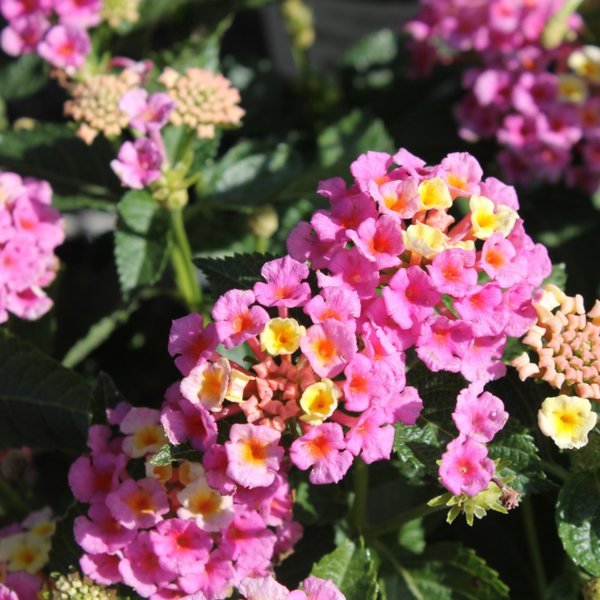
Lantana (Lantana camara / L. montevidensis) at Green Hills Nursery
Fresno Favorite

Lantana

Lantana camara / L. montevidensis

Thrives on exactly the conditions that kill other things — reflected heat, poor soil, little water. Butterflies work it constantly.

Mature size
1–3 ft tall × 3–6 ft wide
Sun
Full sun
Water
Low once established
Foliage
Evergreen in mild winters; may die back after frost
Bloom / interest
Continuous clusters, late spring until frost

From our staff: Cut back hard in late winter to force fresh growth. Note the berries are toxic if eaten, so think twice in gardens used by small children or pets.
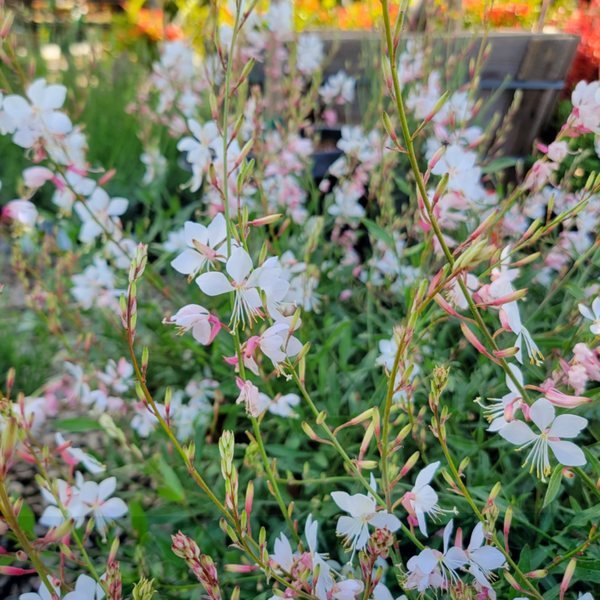
Gaura (Oenothera lindheimeri (formerly Gaura lindheimeri)) at Green Hills Nursery
Fresno Favorite

Gaura

Oenothera lindheimeri (formerly Gaura lindheimeri)

Adds motion and softness to stiff plantings — the flowers float on thin stems and move with any breeze. Long bloom season with very little input.

Mature size
2–3 ft tall × 2–3 ft wide
Sun
Full sun
Water
Low once established
Foliage
Deciduous to semi-evergreen
Bloom / interest
Airy white or pink flowers on wands, spring through fall

From our staff: Shear by about a third mid-summer if it flops or goes leggy; it returns tidier and flowers again into autumn.

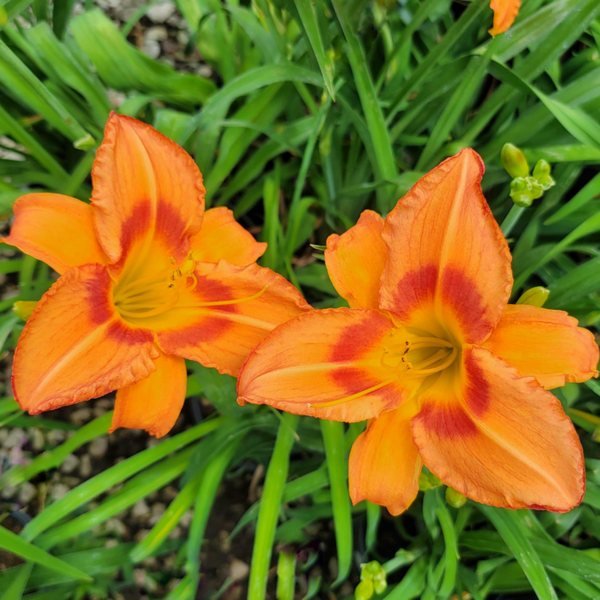
Daylily (Hemerocallis hybrids) at Green Hills Nursery
Fresno Favorite

Daylily

Hemerocallis hybrids

Close to unkillable, spreads into a solid clump that suppresses weeds, and handles the heat while still reading as a lush, traditional perennial.

Mature size
1–3 ft tall × 1–2 ft wide
Sun
Full sun to light shade
Water
Moderate
Foliage
Evergreen or deciduous by variety
Bloom / interest
Late spring into summer; reblooming types flower in repeated flushes

From our staff: Ask for reblooming selections ('Stella de Oro', 'Happy Returns') for repeat flushes rather than one show. Divide congested clumps every few years to keep bloom counts up.

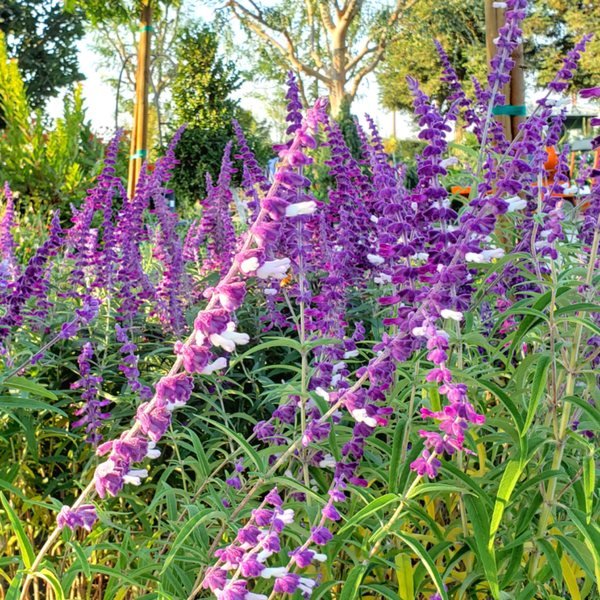
Salvia (Salvia greggii, S. leucantha, S. microphylla) at Green Hills Nursery
Fresno Favorite

Salvia

Salvia greggii, S. leucantha, S. microphylla

The best hummingbird plant on this list, and genuinely drought-tolerant. Autumn sage types flower for months; Mexican bush sage carries the late-season show.

Mature size
2–4 ft tall × 2–4 ft wide
Sun
Full sun
Water
Low once established
Foliage
Evergreen to semi-evergreen
Bloom / interest
Long season — spring through fall depending on species

From our staff: Cut back by roughly half after the main flush to prevent woody, bare centers. Avoid rich soil and heavy feeding — lean conditions produce better flowering.

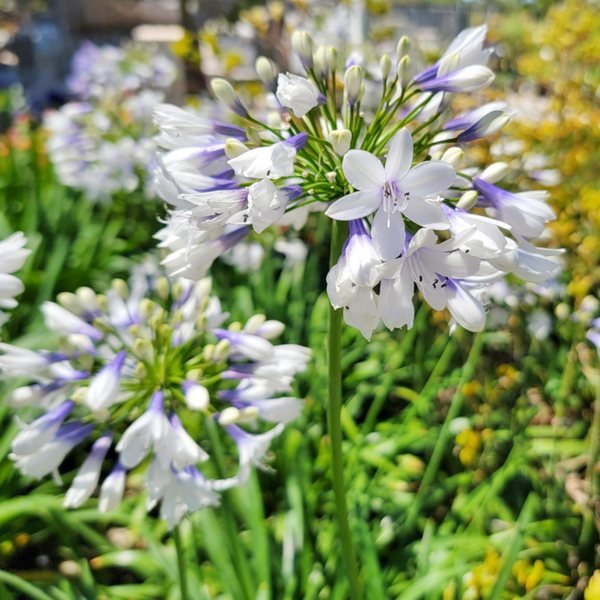
Agapanthus (Agapanthus africanus / praecox) at Green Hills Nursery
Fresno Favorite

Agapanthus

Agapanthus africanus / praecox

Strappy evergreen foliage holds a bed together all year, then throws globe flowers on tall stems in early summer. Tolerates part shade, which few tough plants here do.

Mature size
1–3 ft tall × 1–2 ft wide (dwarf forms ~1 ft)
Sun
Full sun to part shade
Water
Moderate, then low once established
Foliage
Evergreen
Bloom / interest
Blue or white globe flowers, early to mid summer

From our staff: Flowers best when slightly crowded, so don't rush to divide. Remove spent stalks at the base to keep it looking deliberate.

Side by side

Quick comparison

Useful when you are matching bloom season or water needs across a bed.

Perennial Mature heightSun WaterFoliage
LantanaLantana camara / L. montevidensis 1–3 ftFull sunLow once establishedEvergreen in mild winters; may die back after frost
GauraOenothera lindheimeri (formerly Gaura lindheimeri) 2–3 ftFull sunLow once establishedDeciduous to semi-evergreen
DaylilyHemerocallis hybrids 1–3 ftFull sun to light shadeModerateEvergreen or deciduous by variety
SalviaSalvia greggii, S. leucantha, S. microphylla 2–4 ftFull sunLow once establishedEvergreen to semi-evergreen
AgapanthusAgapanthus africanus / praecox 1–3 ftFull sun to part shadeModerate, then low once establishedEvergreen
Getting them established

Planting & care for Valley perennials

Perennials ask for less than people expect here — the mistakes are usually too much, not too little.

🕳️ Plant slightly high, space for year two

A perennial that spends its first winter sitting in cold, wet clay often never returns. Planting a little proud of grade and spacing for the mature clump solves most of it.

  • Set the crown at or just above soil level — never bury it.
  • Space for the second-season size; the bed looks thin for one year and full afterwards.
  • Improve drainage with compost worked broadly through the bed rather than into each hole.

💧 Water to establish, then ease right off

The drought tolerance on these labels is earned in year two. Nearly every first-year failure we hear about is a low-water plant that was never watered in properly.

  • Water deeply and regularly through the first summer, then taper hard.
  • Once established, Lantana, Gaura and Salvia want far less than most people give them.
  • Agapanthus and Daylily appreciate more consistent moisture than the other three.

✂️ Cut back — this is the big one

The single biggest difference between a perennial bed that looks intentional and one that looks tired is a hard cut-back at the right moment.

  • Cut Lantana back hard in late winter to force fresh growth from the base.
  • Shear Gaura by about a third mid-summer if it flops, and it returns tidier and reblooms.
  • Cut Salvia back by roughly half after a flush to prevent woody, bare centres.
  • Deadhead Daylily stalks at the base; remove spent Agapanthus stems entirely.

🌾 Feed lightly, if at all

Rich soil and heavy feeding give you lush leaves and disappointing flowers. Most of these perform better slightly lean.

  • One balanced slow-release feed in spring covers the year.
  • Over-feeding Lantana and Gaura in particular reduces bloom.
  • Skip feeding after midsummer so growth hardens off before frost.

🌿 Divide — but not too eagerly

Division keeps clumps vigorous, though two of these actively prefer being left crowded.

  • Divide Daylily every three to four years when bloom counts start dropping.
  • Agapanthus flowers best when slightly congested — resist dividing it on schedule.
  • Divide in fall or very early spring, never in the heat.

🌡️ Valley-specific watch-outs

A few things behave differently here than the general advice suggests.

  • Lantana may die back after a hard frost and look dead in February — it usually returns from the base, so wait before pulling it.
  • Lantana berries are toxic if eaten; worth considering in gardens used by small children or pets.
  • Afternoon shade is not required for any of these, but Agapanthus and Daylily will take part shade if that is what the bed offers.